|
Photographs from Richard Dunkley's
family |
|
|
A correspondent with this
website, Diana Atkinson, is descended from Richard Dunkley, the builder,
and has There is, on this website, a
reasonably full account of
Richard Dunkley's work |
|
|
|
|
|
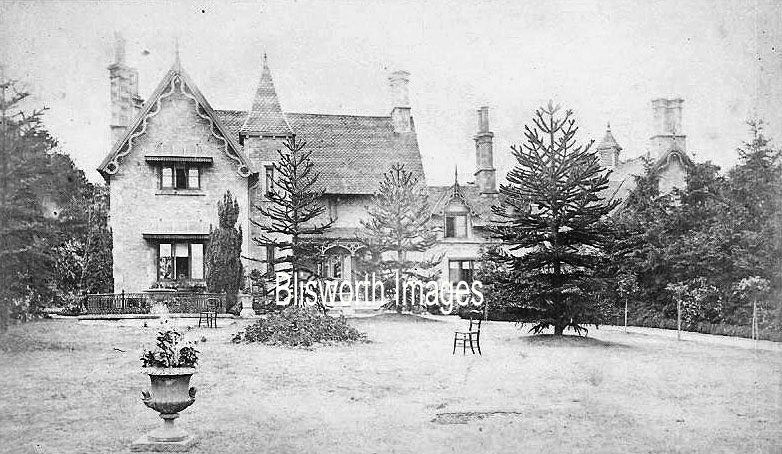
The Lowndes aka.
The Loundes Comparing this picture with a
1950s or 60s one shows the degree to which much |
|
|
|
|
|
|
|
|
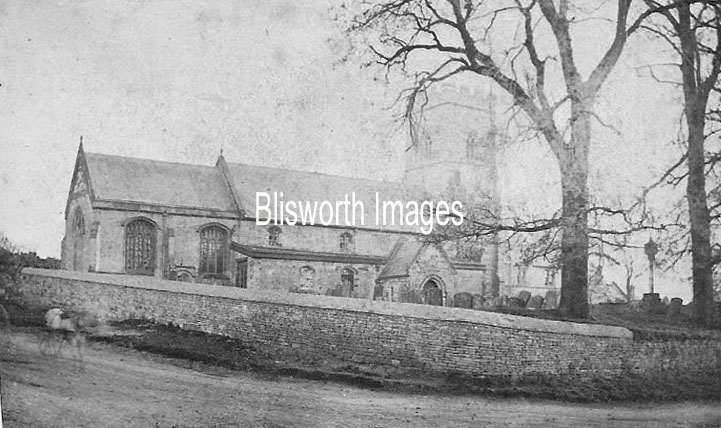
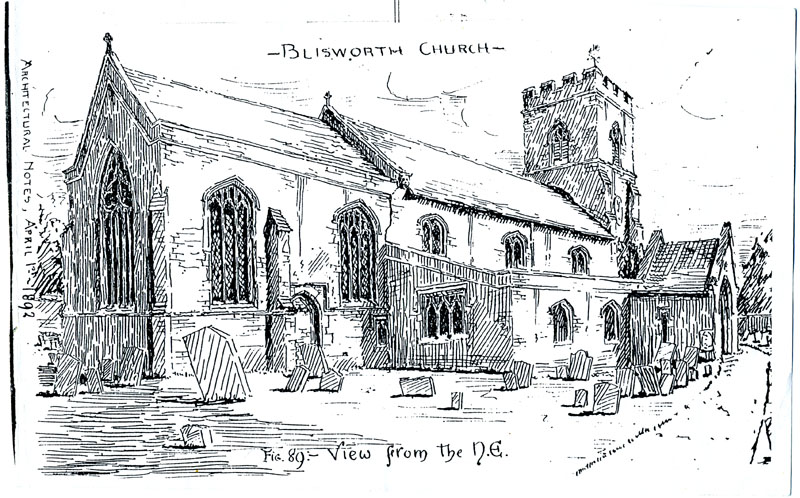
Blisworth Church and "The Cross" (c. 1880 - see below) The picture is taken from a rather standard place but, because it extends well towards the right, it gives us a view of the "Cross" monument which has been, up to now, shown to us only in one of George Clarke's etching. The picture is therefore unique. On being shown it, Paul Barnwell (formerly at English Heritage) comments: "The structure has an exceptionally slender shaft, which makes one think of a timber pole - i.e. of something temporary. On record is the fact that at some point before 1843 a sundial was erected on the base; and that it had disappeared by 1895. (C. Markham, 'The stone crosses of the County of Northampton', Associated Architectural Societies Reports and Papers, 23 part 1 (1895), p. 163). Perhaps that is what the picture shows - a very long gnomon with an ornamental top, with its shadow being read off a dial which was laid out on top of the stone base." We now know that Wetton's Guide to Northampton and its Vicinity mentions the "cross with five ascents, on which there is a wooden cross and a sundial dated 1827". The sundial etc. was created, surprisingly, but perhaps not originally, during the time Rev. Ambrosse was in charge (yet probably absent - see GF Church Notes). Incidently the Northampton Mercury reports an exceptional gale on March 24, 1895 which broke off large pieces from the elm trees in the church yard and perhaps brought an end to the supposed gnomon though the actual article in the newspaper doesn't mention that. The earliest reference to the cross is in Taylor's notes for Bridges - "the remnants still of a stone cross", 1718. We also have a photocopy by GF of some Architectural Notes on the church, dated April 1st, 1892 and labelled as Figure 89. The source is intriguing but is now obscure owing to GF's failure to write any notes on the reverse side. The large number of gravestones in this section of the graveyard must have been cleared by gardeners when the war memorials were installed. No notes remain of the inscriptions now lost. Note there is no
pavement next
to the graveyard wall and, behind the blurred horse, there seems to be a
'flat' that remained after demolishing
a poor house known to be sited against the wall, which appears to be
recently rebuilt. There is record of church wall repairs by Wm.
Sturges costing
£6. 16. 1d in the church-warden's accounts for 1872.
He does more in 1880 and 1887 that was recorded simply as 'on account'
and might be also for walling. With this in mind the above
photograph may be tentatively dated c. 1880. |
|
|
|
|
|
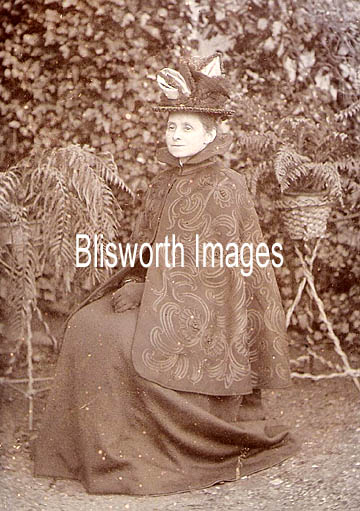
Agnes Dunkley (one of four
daughters of Richard Dunkley) |
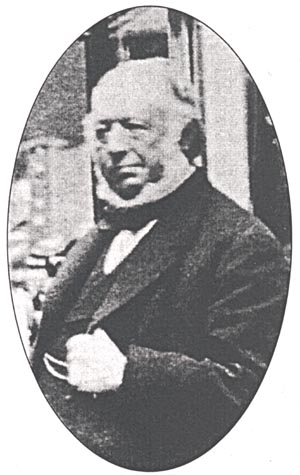
Stated by Geo. Freeston to be Richard Dunkley, c.
1865. |
|
|
|
|
|
|
|
|
|
|
|
|
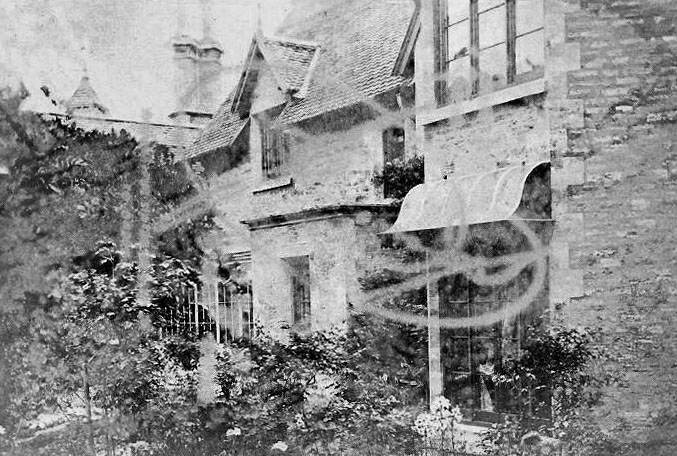
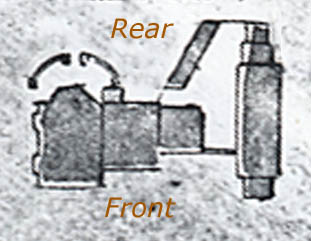 Above, a picture of what is presumed to be the rear of The Lowndes
- similarly
dated. The view of the quioned corner towards the right appears
with strange perspective, perhaps because of the unusual shape of the
rear gable - see inset, being a plan of the building dated c.
1850.
Above, a picture of what is presumed to be the rear of The Lowndes
- similarly
dated. The view of the quioned corner towards the right appears
with strange perspective, perhaps because of the unusual shape of the
rear gable - see inset, being a plan of the building dated c.
1850.